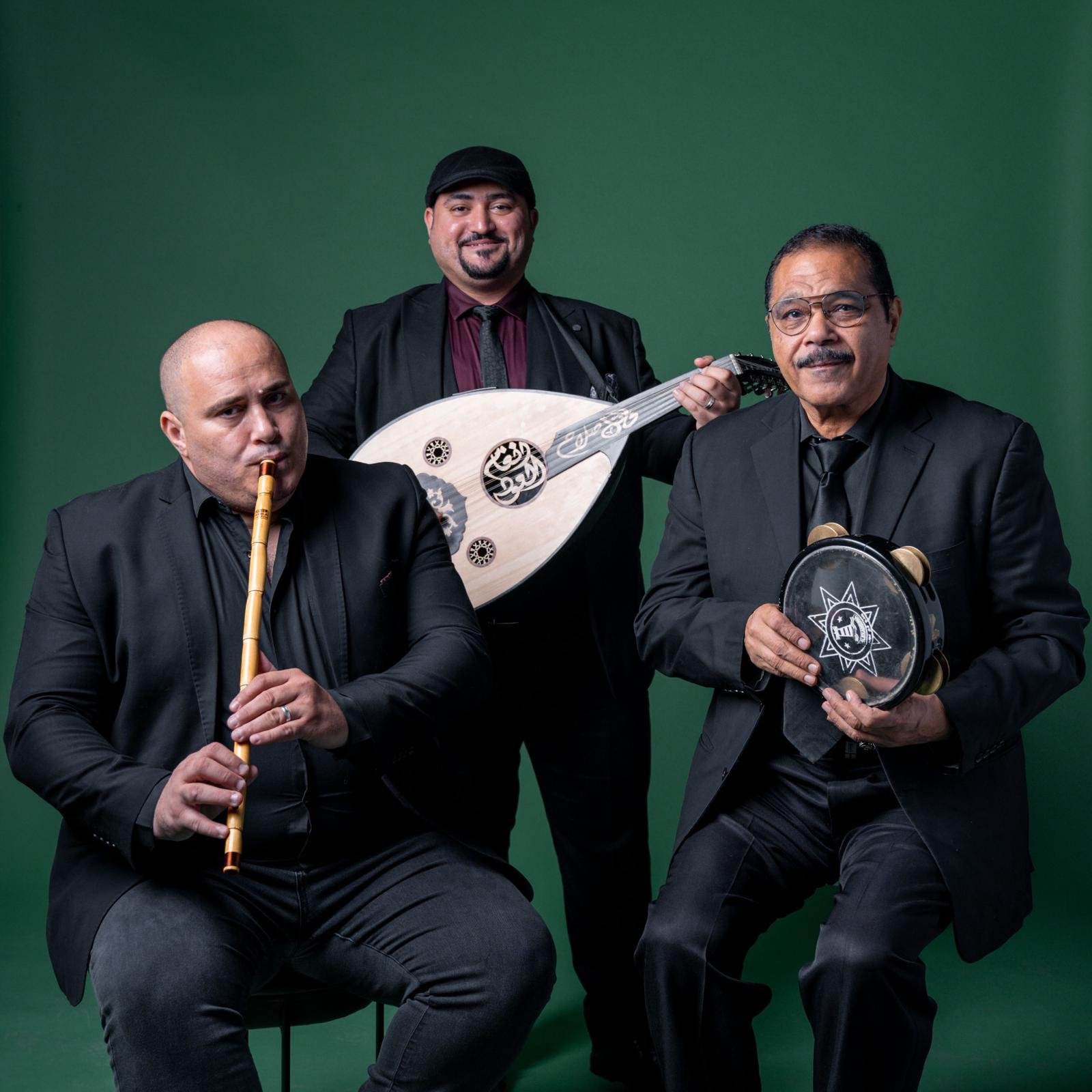
The takht sharqi is the heart of Angham Al Oud. It is a small group of musicians sitting close together, each listening to the others and answering the singer phrase by phrase. This is how Arabic tarab was born, and it is how we perform it today in Dubai and across the UAE, led by Wael Salah, an Egyptian oud player and singer and the founder of the Rouh Dubai Choir (Dubai Opera). We perform for weddings, cultural evenings, dinners, and official and private events.
Watch us live
“Ya Msafer Wahdak” by Mohammed Abdel Wahab, performed by our takht.
What Is a Takht Sharqi?
The takht is the traditional ensemble of classical Arabic music; its name comes from the raised platform the musicians once sat on. It flourished in Cairo, Damascus, Aleppo and Baghdad, and accompanied the great tarab singers of the twentieth century before larger orchestras appeared. What sets the takht apart is conversation. Each instrument has a clear voice, and the musicians improvise and trade melodic phrases, so you feel the music being made in front of you rather than replayed as it was recorded.
The Instruments of the Takht
- Oud: the foundation and soul of the takht; its warm voice carries the Arabic maqamat. It is Wael Salah's main instrument.
- Qanun: a richly ornamented string instrument that fills the space between phrases and adds sparkle to the melody.
- Nay: the sound of human breath in music, bringing longing and reflection to the taqasim.
- Violin: extends the long phrase and follows the singer through mawwal and layali.
- Riq: the takht's traditional percussion, keeping the rhythm and adding life.
- Tabla: added when the evening needs a stronger beat for dance songs and the zaffa.
We choose the instruments based on the occasion, the venue and the programme; not every takht needs every instrument.
The Tarab Repertoire
The takht plays the forms of classical Arabic music: muwashshahat, adwar, qasa'id and taqatiq; the instrumental sama'i and bashraf; and the taqasim and mawawil in which musician and singer improvise. Alongside them come tarab songs in the style of Umm Kulthum and Abdel Wahab that people know by heart from Cairo to Aleppo and Beirut, Khaleeji melodies, and touches of Emirati heritage. We agree on the programme with you in advance and leave room for requests and the tarab moments that come from the audience's response.
How a Tarab Evening Unfolds
An evening usually opens with a calm instrumental piece, such as a sama'i or bashraf, that introduces guests to the sound of the takht. Then come taqasim in the evening's maqam, with the oud or nay preparing the way for the voice. The songs follow, moving from the gentlest to the most lively, with mawawil and guests' requests along the way, until the evening reaches its high point with songs everyone sings together. We adapt this order to your programme: it might be one short set at a dinner, or a full tarab evening.
Vocals with the Takht
Tarab is a dialogue between the singer's voice and the instruments. Wael Salah sings with the takht: the mawwal opens quietly, the instruments answer, and the melody rises as the guests respond. Read about this experience in our article Authentic Arabic vocals with the takht sharqi (in Arabic).
Occasions That Suit a Takht
- Weddings: from the reception to the evening, including a zaffa with a live band. See our Arabic wedding band and zaffa with a live Arabic band.
- Cultural evenings and tarab sessions: when listening is the point.
- Formal dinners, corporate and hotel events: an authentic Arabic welcome for your guests.
- National and heritage occasions: such as UAE National Day celebrations.
- Ramadan and Eid evenings, and family gatherings in majlis settings and homes.
Takht Line-ups
- Duo (oud and tabla): the core of the takht, suited to small spaces and intimate gatherings.
- Trio: oud and tabla at the core, with nay, qanun or a singer as the third member, depending on the event. Wael often plays oud and sings at the same time.
- Full takht: oud, qanun, nay, violin and percussion with vocals, for full evenings and concerts.
If your occasion only needs solo music, we also offer an oud player in Dubai for solo oud or oud with vocals.
Why Angham Al Oud's Takht?
- The takht is at the core of what we do: we play tarab as a conversation between instruments, not only as background music.
- A programme shaped around you: we choose the songs, instruments and length with you, balancing classic tarab with songs your guests know.
- Performing since 2019: in Dubai and across the UAE, and we also have a presence in Kuwait and Egypt. Our performances include Liwa Festival 2026 and the Al Sitt premiere.
- One artistic lead: Wael Salah leads the ensemble at every performance, on oud and vocals.
How to Book a Takht
Send the type of event, the date, the location and the approximate number of guests on WhatsApp. We suggest a suitable line-up and agree on the programme, then coordinate with the venue or event planner on the ensemble's position and the sound system, which the venue usually provides; for small homes and villas we can provide it for a modest extra fee.
Frequently Asked Questions
How is a takht different from a regular band?
A takht is a small ensemble of traditional Arabic instruments. Each musician answers the others and the singer, and the music is built on tarab and improvisation, so it takes shape in front of your guests.
Which takht line-ups do you offer?
An oud and tabla duo, the core of the takht, which suits intimate gatherings; or a trio with nay, qanun or a singer as the third member. Wael Salah often plays oud and sings at the same time. Larger line-ups with qanun, nay and violin are available on request.
What does the takht play?
Classic tarab forms such as muwashahat, qasaid and taqatiq, well-known tarab songs, Gulf melodies, and taqasim on the Arabic maqamat. We take song requests where possible; you'll find a list of songs on the Contact page.
How long is a tarab evening?
Sets run up to 2 hours. That can be a short segment at a dinner or a full tarab evening within that time.
Does a takht suit a majlis or a home gathering?
Yes, it suits majlis and family gatherings well. For smaller venues such as homes and villas, we can bring sound for a modest extra fee; halls and hotels usually provide their own.
How do we book the takht?
Send the type of event, the date and the location on WhatsApp at +971 54 344 6440. The price depends on the type of event, its length and the venue. You can book as little as one day before, and a deposit of up to 50% confirms the booking.
A tarab evening, done the traditional way. Tell us about your occasion, and we will suggest the takht line-up and programme that suit your guests.